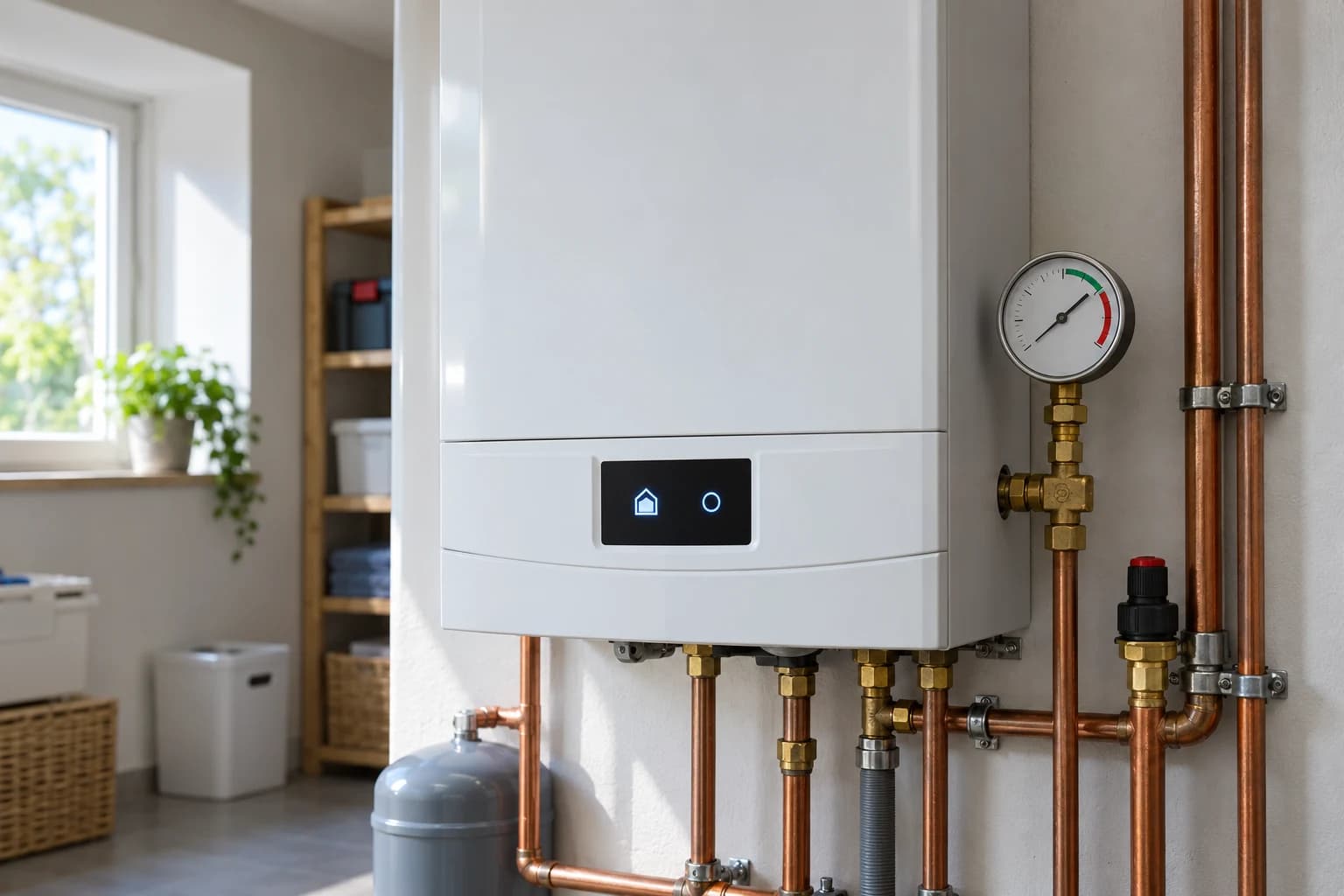
- Read the pressure cold and compare it with the manual’s range.
- Top up slowly, and only if your model’s manual allows it.
- Pressure that keeps dropping signals a leak: have it traced.
Why pressure matters
A closed heating circuit works with enough water pressure for water to circulate everywhere and for the appliance to stay protected. Too low and the boiler may lock out; too high and the relief valve may open. The correct range is in your model’s manual and on the gauge.
Where to read the pressure
Most boilers have a gauge or show the value on the screen. Read it cold if you can. If the reading varies a lot between heating off and running, note both values: it is useful information for the engineer.
If the pressure is too low
First look for a visible leak (radiators, joints, the floor under the appliance). If your model’s manual allows it, you can slowly top up the water with the filling loop to the indicated range. Do not do it several times a week: pressure that keeps dropping reveals a leak that needs tracing.
If the pressure is too high
Switch the heating off and let the circuit cool before reading the value again. Do not open the safety valve to “drain” the circuit. Pressure that rises again after cooling can point to a worn expansion vessel or overfilling.
When to call a professional
- The pressure drops after every top-up
- Water runs from the valve or a joint
- You are not sure how to refill the circuit safely
Frequently asked questions
What is the right pressure?
It depends on the model and the installation. Follow the range in the manual and on your appliance’s gauge.
Can I top up the water myself?
If your model’s manual allows it, yes, slowly and up to the indicated range. If the pressure drops again, have the leak traced.
My screen shows a pressure code, what now?
See our error-code guide by brand to understand the display, then follow the safe steps given.
The right next step
Observe the symptoms, avoid risky handling and note what changes. For a recurring problem or a renovation project, an on-site diagnosis lets you choose a suitable solution rather than a temporary fix.
 Vaillant and Bulex: understanding F22 and F28